The Healing Pool

(Photo courtesy of DeviantArt.com)


I was standing at the very edge of a pool – the kind used in ancient days – a healing pool.  Suddenly, children were walking toward me.  Each one reaching out a hand for me to pull them out of the water.  They ranged in age from 2 years to 18 years old.  As I grabbed them, they stepped aside and stood behind me.  No one spoke – not even me.

With the last one lifted out of the water, her hand in mine, I turned to survey the sea of children.  The older ones held little ones in their arms.

We all understood that each one was responsible for the other.  But, I knew that ultimately I was to care for all of them.  Somehow, I needed to find a safe haven.  They needed food and clothes and a place to stay.  How can I feed all of them?  I wondered.  There must be at least a hundred children.

Flowing together, I lead the river of lives as we streamed down the crowded streets.  Even now, we made no sound.  Not knowing where to go, I wandered – each step with the weight of a hundred souls.  As if it were the line from a psalm, the words How can I feed them? kept cycling in my mind.

Winding our way through unknown streets, I became disoriented, but the children continued to follow me unheeded.  Where will these children be safe?  I can’t take care of them.  Look at how the older ones care for the younger ones.  What am I going to do?

We came to a clearing – a piazza akin to the kind in Rome.  At the far end stood a Cathedral.  I headed there.  Certainly, they will help me.  As I drew closer, the lines across my brow disappeared, and I smiled at the children nearest me.  I nodded my head in the direction in which we were headed, for an orphanage stood 300 yards away.

Nuns dressed in the traditional habits worn in the 1960s or earlier stood in the courtyard of the orphanage.  Brushing dirt from her skirt as if the swiping action of her hand could remove the stains from a garment that had been worn beyond its useful years, one of the nuns approached me.  Her clear, brown eyes scanned the children and came to rest on me.

“Good afternoon,” she said with a voice as pure and clear as her eyes.

“Hello,” I replied – hoping that my panic was not too evident to the children.  “It seems as if I need some help.  We need food and a place to stay.  Actually, the children need food and a place to stay.  I am not asking that you care for me, also.”

Tears flooded her eyes.  “We have no food, and we are at full capacity – beyond full.  There is no room for more.”

“I understand.” As I reached out my hand in farewell, she closed the short distance between us and hugged me.  The embrace felt natural as if she were my sister, and I hugged her in return.   Then, I pulled back and looked once more into her eyes.  She understood, also.  No words were necessary.

Turning away from the orphanage, I noticed the faces of the children.  They calmly stood before me, waiting to follow.  They understood, too.  They always had.

“We have not found home, yet.  Let’s continue onward,” I called out to them.

They said nothing in return.  Their silence was a comfort to me.  It was at that moment that I knew that my search was over.  There was no other place for them; they were my children.  Hadn’t I pulled them out of the healing pool?


Freedom and Bitterness


9/22/2016 “As I walked out the door toward the gate that would lead to my freedom, I knew if I didn’t leave my bitterness and hatred behind, I’d still be in prison.” – Nelson Mandela

via Bitterness — Eyes + Words


The above photo and quote are reblogged from the Eyes & Words blog site.

In 1962, Nelson Mandela, an anti-apartheid activist in South Africa, was sentenced to life for conspiring to overthrow the state.  Due to international pressure and fear of a racial civil war, he was released after serving 27 years in prison.


Even though he had justifiable reasons to be angry and to encourage his supporters to seek retribution, he chose the path less traveled.  His decision to forgive and forge forward is helped him to be a great leader.  We all could stand to learn from his example.

Often, we imprison ourselves by our perceptions, attitudes, and thoughts.  We react to situations rather than respond.  Whatever situation you are facing right now, the choice is yours.

Do you choose bitterness or freedom?

For more of Eyes + Words blog posts, click here

#ActuallyAutistic

When you encounter another person and you sense a difference, how do you respond? I hope the following poem gives you a moment of pause. (I hope it helps me to be more sensitive to others, also.)

It Is Just Too Much Work

one-step-at-a-time


“It . . .is . . .just . . .too . . .much . . .work.”

Frustration breaks our resolve, and our hearts collapse from the strain.

Chronic illness, which we must eat every day, is a fruit that’s bitter from the first bite.  The monotony of our psychological diet leaves us malnourished as we struggle to find the strength to fight to live a life beyond.

So, at some point, even the brave, whose banner reads “We will find a way to be content,” find themselves prostrate on the ground.  As you lean your ear to their mouth, you will hear them whisper, “It . . .is. . .just . . .too . . .much . . .work.”

Then, slowly, they bend one knee and then the other.  Grasping a handicap bar, they pull themselves up.  Their eyes tell the story: clear and focused on the day and its promise of pain, fatigue, trouble, and frustration.  With the smiles of Mona Lisas, they ask themselves, “Do we cry out to heaven with bitter tears?  Are we defeated?”

“No!”  Birds scatter as the sound carries from sea to shining sea.

The more I read, the more I find a deep resolve in the Chronic Illness Community.  Our struggles cannot be easily understood by those who do not experience the realities of our daily lives.  At times, darkness settles on us, and we do not have the energy to fight.  The length of time it takes for the depression to lift is unknown, unpredictable, and capricious.  We know it will release us, eventually.  However, in those bleak moments, it is just too much work.  We need to remove ourselves from the demands around us.

Nevertheless, the more I read blogs written by people suffering from the wide blanket of chronic illness, the more I am amazed at their spirit.  The heartbreaking and heartwarming stories carry the same underlying theme:  It is just too much work, but I will not give up.

I love this aspect of my community.  For the past six years, I have been determined to live despite my disease.  I want to do all that I can for as long as I can.  Sometimes this means tackling two steps to enter a friend’s house.  Sometimes it means that I spend time with family even though I can hardly stay awake.  Other times, I need to listen to my body and bow out of activities I was looking forward to attending.  In the end, I have articulated my determination into the motto Never Give Up.

Often, I see wheelchair-bound people without any spark in them.  My heart bleeds for them.  Could it be that their resolve has been broken by daily frustrations?   I watch them look at me, then my wheelchair, and then into my eyes.  I smile a little; they smile a little in return.  As we engage in an easy conversation, their words expose their pain.  The mirror reflecting their value is cloudy, and their reflection distorted.  In the midst of despair, they fuss and find reasons not to participate in any activities.  Even though we both hope that the feeling will pass, their eyes reveal their secret.  As they complain to me, they are covertly saying, “I don’t want to do anything.  It’s too much work.”

They’re right.  It is too much work  – but, we will encourage one another to do it anyway.  After all, what are our choices?

How a good idea, goes bad

I don’t know if you have heard of, or if you have ever considered having your medications delivered to you in blister packs. It had been suggested to us by Laurie my social worker when we tol…

Source: How a good idea, goes bad

I am a mom of a child with cmt….

When I read the following post, I identified with the adjustments we make when first diagnosed with a chronic illness. Her storytelling skills will draw you into her experience. Hope you enjoy it as much as I did.

pipedreamwear.com's avatardisability advocate, 50something mom of two, my son has charcot marie tooth disease

I have never heard of charcot marie tooth until my son was diagnosed with it approximately  ten years ago. I always knew something was “wrong”. He was clumsy and fell often but i thought he was just growing into himself. One day in second grade, his teacher called me. She was screaming at me and asking me what is “wrong with your son?” “Doesn’t he realize he walks into everybody?” “I can’t have this in my class”. She basically went on a screaming tirade about my son. I hung up both so angry at her words and they way she spoke about my son that I wanted to just march up to the school and get her fired and then kick her ass. But I didn’t. I took a few deep breaths and remained calm. After a ton of research I had him tested at a local hospital. They did a myriad…

View original post 412 more words

Facing Death: the Great Divide


the-great-divide
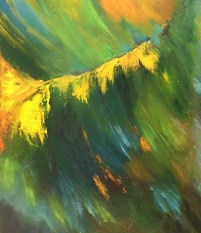
The Great Divide (oil painting by Rose Wolfe)


Recently, I read an article wherein the author, who has lived with a chronic illness his entire life, was lamenting how he felt pressured to “put on a happy face.”  His main complaint focused on the inability of the people in his life who were reluctant to address the depression and dark moments that the chronically ill face, especially death.   The author was angry that he had no outlet to express his feelings.  Due to his chronic illness, he has spent long periods of time in hospitals.  As a result, he has met and lost friends.  Death is a strong, real presence in his world.  Now, he is facing a serious deterioration in his condition, and death cannot be ignored any longer.  In fact, I got the feeling that he doesn’t want to ignore the topic of dying.  He is angry, frustrated, and depressed.  Inasmuch as he is in a troubled state of mind, he extrapolated his feelings to include all chronically ill who are facing death.  He believes that anyone who chronically ill and at peace with death must be “faking it.”

Due to his chronic illness, he has spent long periods of time in hospitals.  As a result, he has met and lost friends.  Death is a strong, real presence in his world.  Now, he is facing a serious deterioration in his condition, and death cannot be ignored any longer.  In fact, I got the feeling that he doesn’t want to ignore the topic of dying.  He is angry, frustrated, and depressed.  Inasmuch as he is in a troubled state of mind, he extrapolated his feelings to include all chronically ill who are facing death.  He believes that anyone who is chronically ill and at peace with death must be “faking it.”

While I acknowledge that dark moments are part of the human psyche (chronically ill or not), not everyone fears death. Personally, I know of three people who were at peace with the inevitability of their death: my first husband, my niece, and a friend.  However, I have also watched others who faced death with anger, fear, and resentment.

There are at least two issues underlying the ranter’s anger:  (1) The perceived pressure to “put on a happy face” when the author would rather have talked about his impending death, and (2) the author’s assumption that everyone fears death.  In fact, the author went so far as to say that if the dying person was content with the situation, then they were faking it.  He said he hated those fakers.

I feel sorry for the author.  He is facing the end of his life, he is angry, and he can only see the world from his point of view.  To be at the end stage of your life and only see bleakness is a horrible way to spend your remaining days.  I am also sorry that he does not have the support that he needs.  (I wonder if the support is missing or if the support is not what he wants to hear.)  Many people do not want to talk about death and they do not want to be around angry people.  He might be in a Catch-22 situation.  No matter what the specifics of his situation, I wish there was something that could be done to help him.

My chronic illness puts me at risk for a stroke or sudden cardiac death.  Rather than churning my insides into a rancid soup of anger and hatred, I made the decision to be happy and do as much as I could for as long as I can.  One of my new mantras is Don’t Give Up – Ever.  I fear that the author has given up – on themselves and on others.  Hence, the Great Divide and why he can’t understand how people can choose a different approach.

If we were to meet one another on happenstance, I wonder how the author would react to my words?  Would he believe me that not everyone fears death?  The range of feelings surrounding death are as varied as there are people.  It is not a simple matter.  In truth, the way we feel about death has a lot to do with the way we feel about life.

The three people I mentioned at the beginning of this post (who were ready to face death) were Christians.  Whether or not you believe in God is not the point.  My point is that Christianity gives the believer hope about the future and strength to face the present.

Please don’t misunderstand what I am saying.  All three people had to deal with pain, a slowly deteriorating body, and dark moments.  Still, spending time with them was a rewarding, enriching encounter.  The more that they released themselves to the passing, the more serene they were in spirit.  They had hope and a vision.

On the other hand, I have known people who did not have faith in God.  As they faced death, the angrier they became.  They spent their last days spewing hatred.  Their beliefs had a deep impact on their feelings and psyche.  Before you jump all over me, I know that there are people who do not believe in God but have passed away in peace.  Still, there is a Great Divide about facing death.

Is death an end or the beginning?

Looking Through a Glass Darkly

Perception_edited-1

You just might be wrong.

Because you believe something doesn’t make it true.  Your perception is a reality, not the reality.

Take my uncle for example.  Diagnosed with myotonic dystrophy in his 40s, he was scuttled off to live with his 82-year-old mother.  As soon as he heard the news, he was done.  It was his free ticket to sit all day, watching television, while his mother did all the work. He did nothing – not one thing.

For four years she waited on him.  By the time my grandmother was 86, she needed help herself. So, we made room, and they came to live with my family and me.  Four adults and two children in a three-bedroom ranch. The roles were modified. Now, my grandmother and uncle both sat and watched television from morning to night. They did notPerception
participate in any family events. They did not want to do anything. They did nothing – not one thing. I did all the work. It was okay with me. I did it because it needed to be done. No expectations and no rewards.

So, what was my motivation?  My grandmother and uncle needed help. Neither one had ever been kind to me. It was a fact. I didn’t care. The relationships were determined the moment I was born. (Probably before I was born.)

What does this have to do with truth and perception?  My uncle was a skeptic.  He would tell me I had an ulterior motive. “What motive could I have?” I would ask. “You have nothing. Grandma has nothing.  I am taking care of you because you need a caregiver.”  He never answered the question. He refused to believe that I took them in because they needed help.  He would not (could not?) understand that their lack of grace towards me did not determine my actions towards them.  He could only see life as a reflection of himself.

Grandma’s point of view?  I don’t know.  She would tell me stories of her life. In all of them, she was the sad victim.  I would wipe her tears.  Unhappy and dissatisfied, she looked at life through a glass streaked and stained with misery.

Today, I live wiPerception_edited-2th myotonic dystrophy.  I do not sit all day watching television.  I write, read, and paint.  In addition, I visit people and invite people into my home.  I attend church, a writer’s group, and a painting class.  What do I see?  Hope and love.  Why?  Because my belief is based on a faith in God.